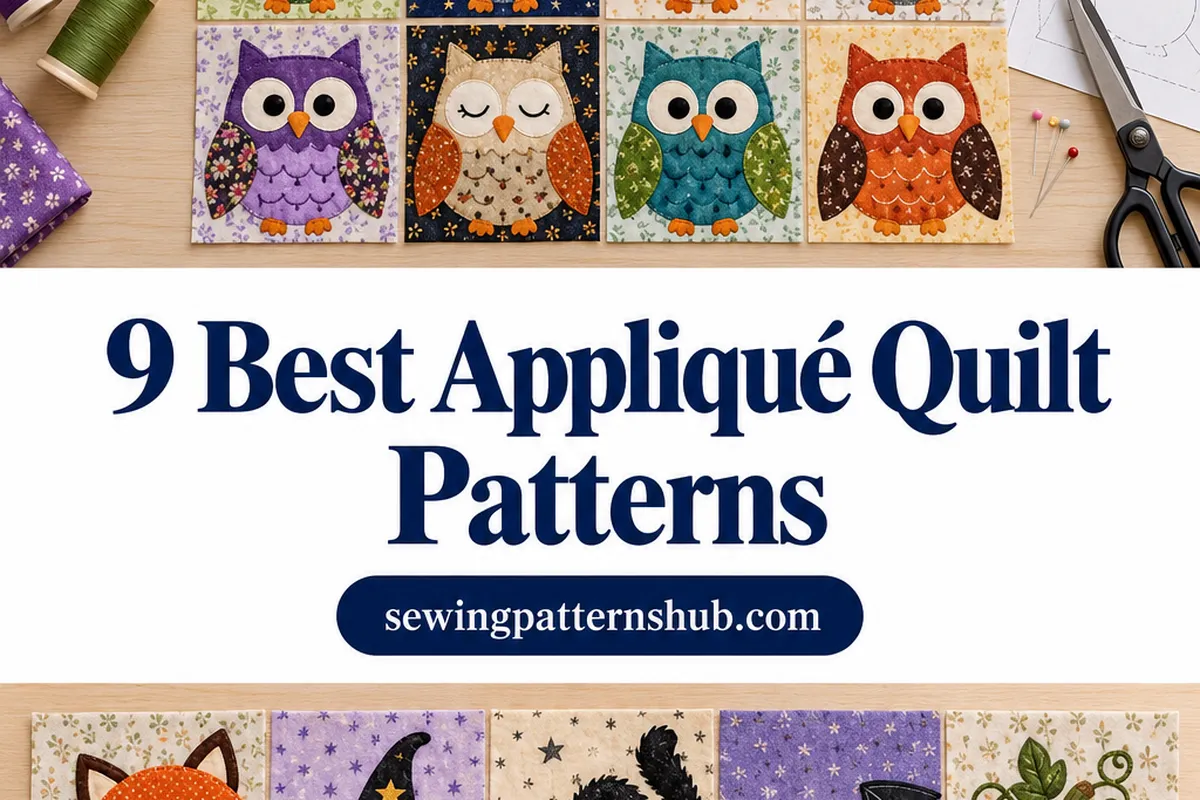
9 Best Appliqué Quilt Patterns for Turning Scraps into Pictures
Some quilt ideas just refuse to be pieced. A round pumpkin, an owl with big eyes, a wreath of daisies: build them from squares and triangles and you end up with a hundred tiny pieces and a lot of unpicking. Appliqué solves that. You cut the shape, iron it onto the background and stitch around it, and with fusible web it is one of the friendliest ways into quilting. Good appliqué quilt patterns give you full-size templates, a layout guide and a finished size, so the picture comes out the way it looks on the cover.

Two designers on this list draw their templates especially for fusible web, so that is where the notes after the cards begin. Seven picks are blocks or single motifs; the tray cloth and the runner are finished pieces.
Which Appliqué Quilt Patterns Made My Shortlist
Printed panels, embroidery machine files and SVG cut files did not make it: each pick is a template you cut from fabric yourself. Sizes in the cards are the ones each designer gives for the block or motif.
TL;DR: Seven blocks and two finished pieces: twelve 8 inch owls, a baby fox, a Halloween block for an 8.5 x 11 inch frame, a 14.5 inch pumpkin, daisy and Christmas wreaths, 17 inch love birds, a mushroom tray cloth and a 31 x 15 inch floral runner.
Quick Picks
- Best for a baby quilt: Little Owls BUNDLE – 12 Applique Patterns
- Best for small appliqué: Baby Fox Applique Template
- Best for halloween appliqué: Hats, Cats, Bats – Applique Pattern
- Best for fall block: Pumpkin Applique Pattern PDF
- Best for easy project: Mushroom Applique Easy PDF Pattern
- Best for floral wreath: Daisy Wreath – Applique Pattern PDF
- Little Owls BUNDLE – 12 Applique Patterns – Best for a baby quilt
- Baby Fox Applique Template – Best small appliqué
- Hats, Cats, Bats – Applique Pattern – Best Halloween appliqué
- Pumpkin Applique Pattern PDF – Best fall block
- Mushroom Applique Easy PDF Pattern – Best easy project
- Daisy Wreath – Applique Pattern PDF – Best floral wreath
- Christmas Wreath Applique Pattern PDF – Best Christmas appliqué
- Spring Love Birds Quilt Appliqué Pattern – Best statement block
- Table Runner Applique Quilt Pattern PDF – Best table runner
Best for a baby quilt
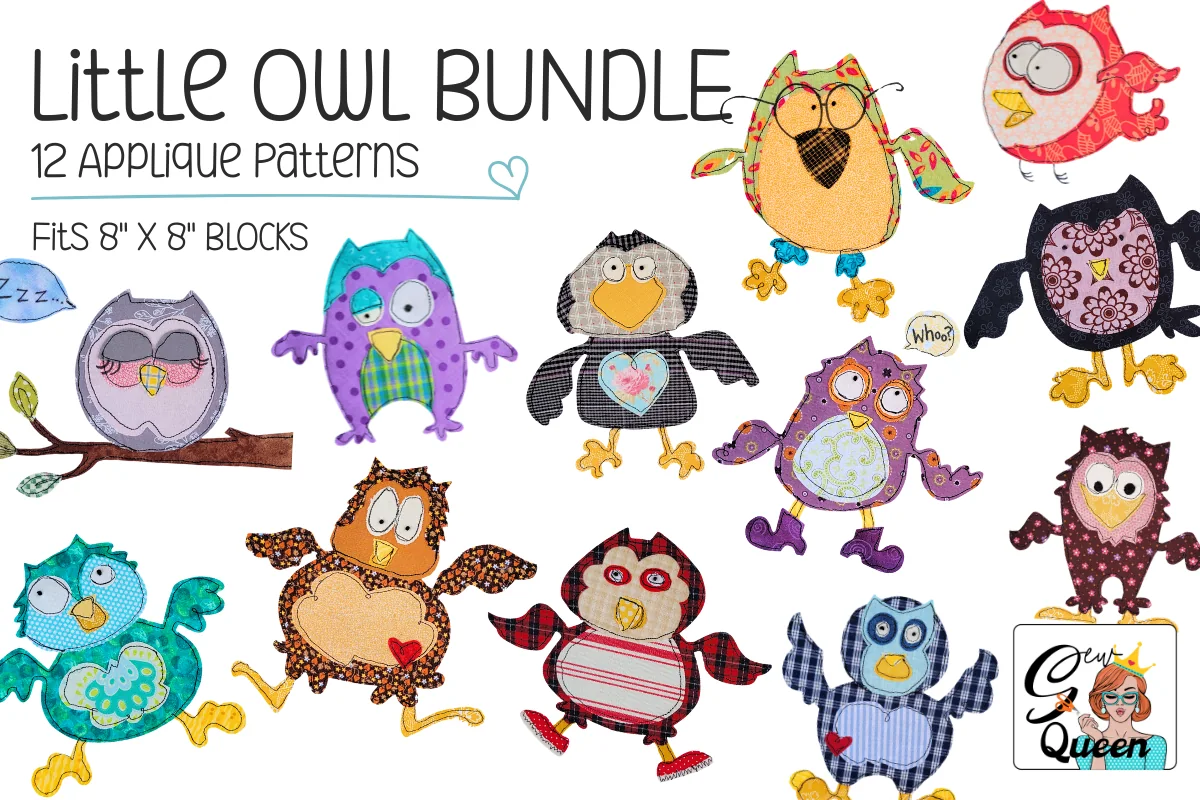
1. Little Owls BUNDLE – 12 Applique Patterns
Best for: 12 quirky owl blocks. Designed by Sew Queen.
- 12 owl appliqué patterns
- Finished blocks 8 x 8 in
- Made especially for fusible web appliqué
- Appliqué patterns only, for quilts, borders, mug rugs or placemats
Without sashing, twelve 8 inch blocks in a 3 x 4 layout measure 24 x 32 inches; sashing and a border bring that up toward a small baby quilt. The 37-page PDF gives each owl its own materials list and fusible web steps.
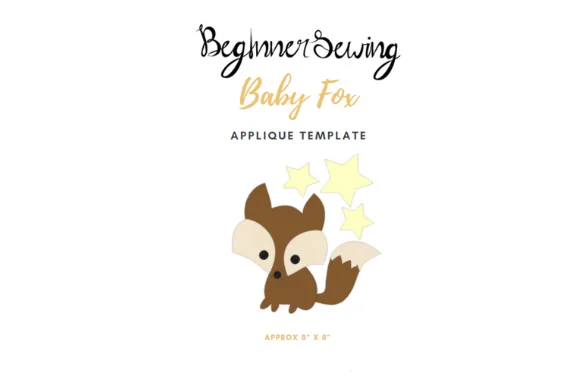
Best small appliqué
2. Baby Fox Applique Template
Best for: a baby fox for pillows, bags and bibs. Designed by Beginner Sewing.
- Fits in a box about 8 x 8 in or larger
- Template pieces with a diagram and instructions
- Allows for a 1/4 in seam allowance if cut on the outer line
- For pillow covers, zip bags, bibs and quilt blocks
One motif only, sized to fit an 8 inch box or larger. Its template has an outer line with 1/4 inch to turn under and an inner line for raw edges, so it works with either method.
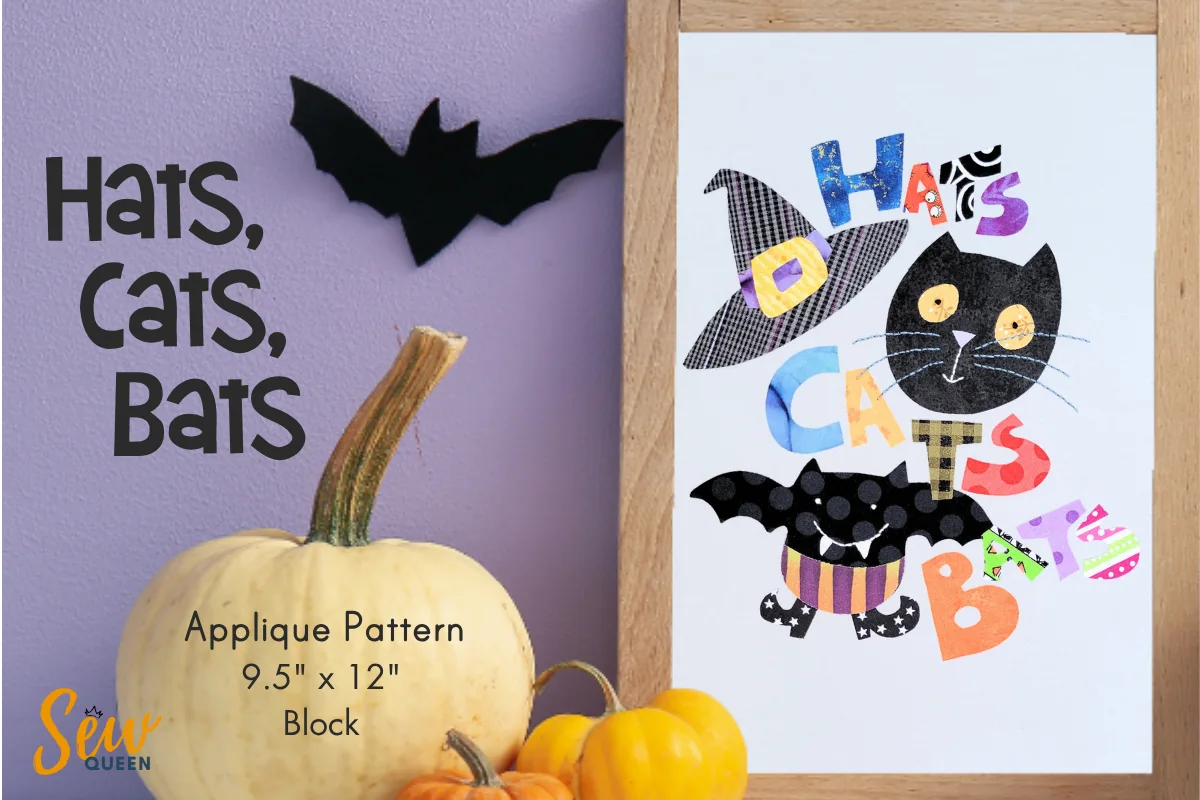
Best Halloween appliqué
3. Hats, Cats, Bats – Applique Pattern
Best for: a witch hat, a scaredy cat and a bat. Designed by Sew Queen.
- Fits a 9.5 x 12 in fabric block
- Fits an 8.5 x 11 in picture frame
- Any appliqué technique; made especially for fusible web
- For wall quilts, placemats and tote bags
The fabric block is 9.5 x 12 inches and is meant to sit in an 8.5 x 11 inch picture frame, so it can hang as framed art instead of a quilt.
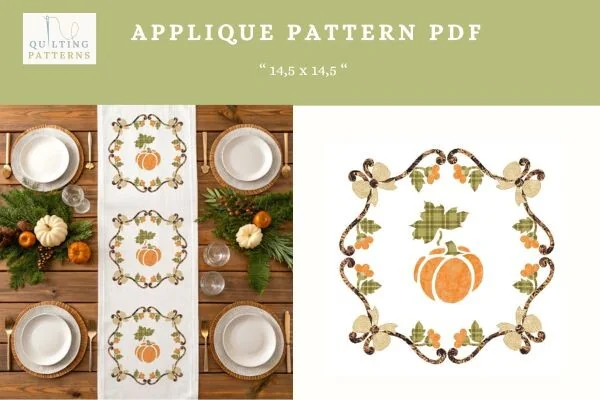
Best fall block
4. Pumpkin Applique Pattern PDF
Best for: a pumpkin with vines and leaves. Designed by Quilting patterns.
- Finished block 14.5 x 14.5 in
- Central pumpkin with vines and leaves
- For table runners, quilt blocks, pillows or placemats
Choose this one for a larger single block: it finishes at 14.5 inches square, with vines and leaves around the pumpkin. The listing says nothing about written steps, so in my view it suits someone who already knows a fusible method.
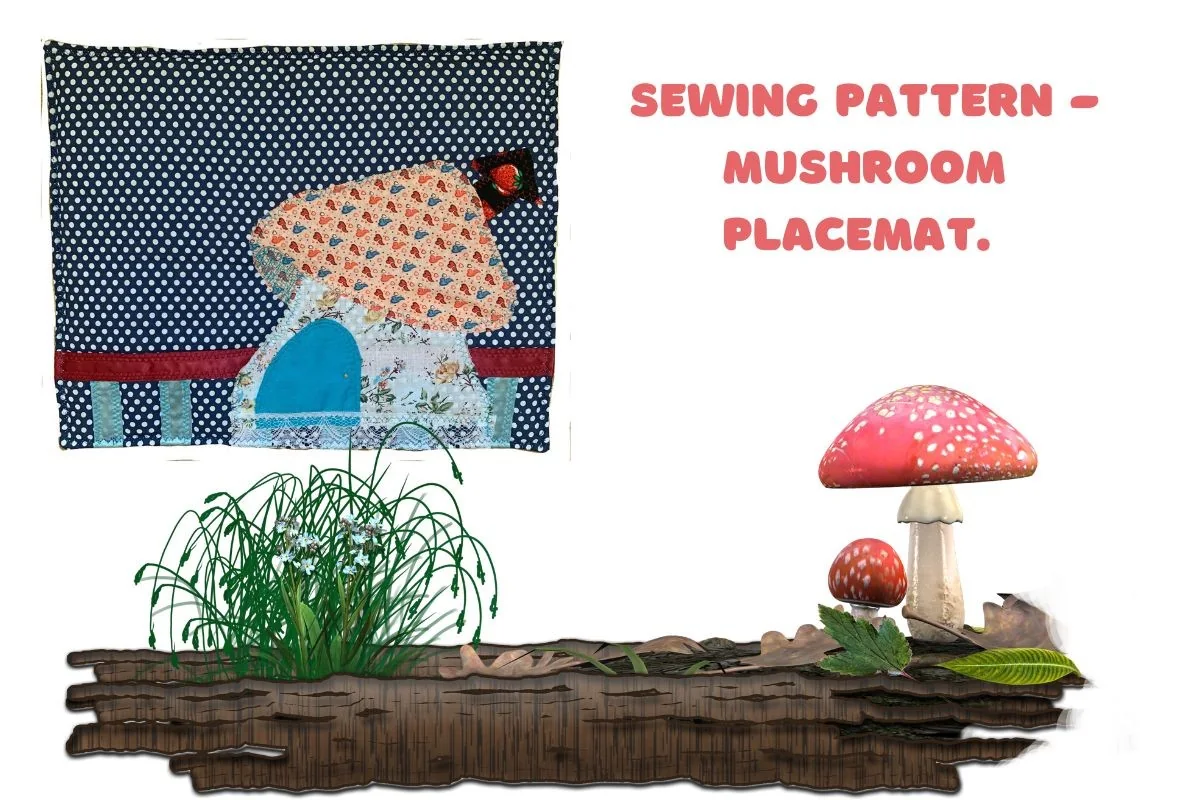
Best easy project
5. Mushroom Applique Easy PDF Pattern
Best for: a mushroom house tea tray cloth. Designed by nadia12.
- Woodland mushroom house appliqué
- Written pattern with images and a step-by-step tutorial
- Made as a tea tray cloth, about 35 x 30 cm
A finished object rather than a block: a woodland tea tray cloth of about 35 x 30 cm (roughly 14 x 12 inches), with a 3-page tutorial that also covers a placemat.
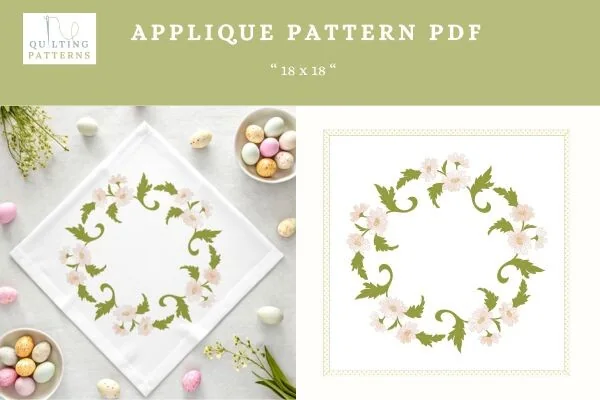
Best floral wreath
6. Daisy Wreath – Applique Pattern PDF
Best for: a circle of daisies and leaves. Designed by Quilting patterns.
- Full-size template 18 x 18 in
- Clear layout and easy-to-follow instructions
- For pillows, quilt blocks, runners, placemats and wall hangings
- For beginners and experienced quilters
The 18 inch template is full size, so there is nothing to enlarge, and the designer pitches it at beginners and experienced quilters alike. The daisies repeat around the ring, which in my view makes the cutting more repetitive than difficult.
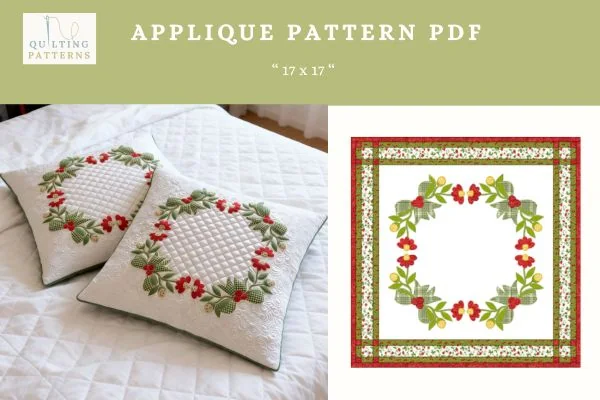
Best Christmas appliqué
7. Christmas Wreath Applique Pattern PDF
Best for: a festive wreath with gingham bows. Designed by Quilting patterns.
- Appliqué about 17 x 17 in on an 18 x 18 in pattern
- Red blossoms, green leaves and gingham bows
- Full-size layout
- For pillow covers, table toppers and wall decor
The wreath measures 17 inches on an 18 inch layout. In my view that leaves a narrow margin on an 18 inch pillow cover, and a border would give it more room on a wall hanging.
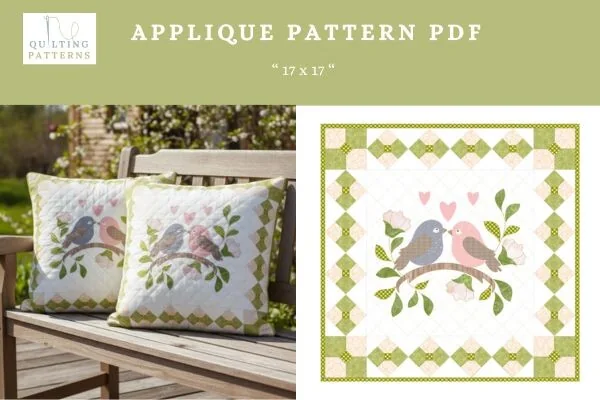
Best statement block
8. Spring Love Birds Quilt Appliqué Pattern
Best for: a bird couple with florals and a patchwork border. Designed by Quilting patterns.
- Central appliqué 17 x 17 in
- Bird couple on a branch with florals
- Classic patchwork border
- For quilts, pillows, wall hangings and nursery decor
The only listing here with a stated skill level, confident beginner to intermediate. The 17 inch center comes with a patchwork border layout, so it is part appliqué, part piecing.
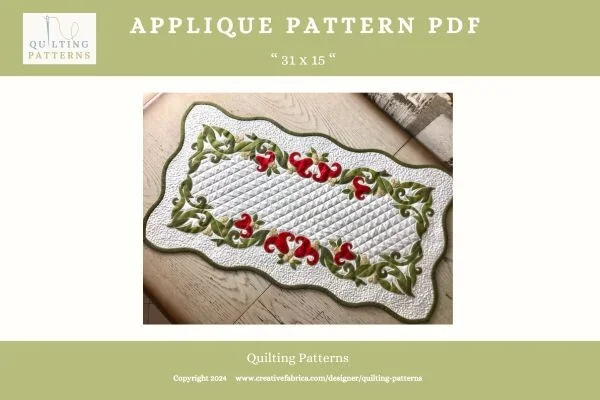
Best table runner
9. Table Runner Applique Quilt Pattern PDF
Best for: a floral runner with swirling details. Designed by Quilting patterns.
- Finished runner 31 x 15 in
- Full-size appliqué templates and a full-size sketch
- Easy-to-follow appliqué instructions
- For beginner and experienced quilters
Not a block but a 31 x 15 inch runner, with full-size templates and a full-size sketch for placing them. The narrow swirls on the cover may need slower stitching, so test your stitch on a scrap first.
Quick Comparison
| Pattern | Theme | Size | Use |
|---|---|---|---|
| 1. Little Owls BUNDLE – 12 Applique Patterns | Owls | 8 x 8 in blocks | Baby quilt |
| 2. Baby Fox Applique Template | Fox | About 8 x 8 in | Blocks, pillows, bibs |
| 3. Hats, Cats, Bats – Applique Pattern | Halloween | 9.5 x 12 in | Wall quilt, frame |
| 4. Pumpkin Applique Pattern PDF | Pumpkin | 14.5 x 14.5 in | Pillow, runner |
| 5. Mushroom Applique Easy PDF Pattern | Mushroom | About 35 x 30 cm | Tray cloth |
| 6. Daisy Wreath – Applique Pattern PDF | Daisies | 18 x 18 in | Pillow, block |
| 7. Christmas Wreath Applique Pattern PDF | Christmas | 17 x 17 in | Pillow, wall |
| 8. Spring Love Birds Quilt Appliqué Pattern | Love birds | 17 x 17 in | Quilt center |
| 9. Table Runner Applique Quilt Pattern PDF | Florals | 31 x 15 in | Table runner |
Fusible, Turned Edge or Needle-Turn
Two listings here, the owls and the Halloween block, say they are drawn especially for fusible web, and both add that any appliqué technique will work. The methods differ mainly in what happens to the edge of each shape:
- Fusible raw-edge appliqué: fusible web has a paper backing. You trace the shape on the paper, iron it to the wrong side of the fabric, cut it out, peel the paper and press the shape onto the background. The raw edge is then held with a straight stitch about 1/8 inch inside the edge, a blanket stitch or a satin stitch, which is a very dense zigzag.
- Turned-edge appliqué: the seam allowance is pressed under before stitching, often over a freezer paper template with a little starch, and the shape is sewn down by hand or with a narrow machine stitch. No raw edge is left to fray.
- Needle-turn appliqué: a hand method. You mark the shape on the right side, cut it with a small turn-under allowance (around 3/16 inch is a common guide) and tuck the edge under with the tip of the needle as you sew it down with tiny stitches.
For a first block, fusible raw-edge work is usually the easiest to control. The author of one tutorial in the search results found that a dense satin stitch weakened the fabric edge on her quilt, even with fusible web; that is one quilter’s experience, but a sample on scrap fabric shows quickly how your stitch behaves.
Before You Trace: Reading the Template
Tracing onto paper-backed fusible web reverses the motif relative to the printed template. You trace on the paper side and fuse it to the back of the fabric, so a fox that faces left on the page faces right on the quilt. Patterns written for fusible web often print the shapes already reversed; the printing or fusible notes in the PDF should tell you which version you have.
Check the seam allowance as well. The baby fox template has two lines: cut on the outer one and you have 1/4 inch to turn under, cut on the inner one for raw-edge work. Where shapes overlap, such as a leaf tucked under a flower, the lower piece usually needs a little extra so the top piece covers its edge.
Print one page at 100% and measure it, or measure the test square if the PDF has one, before you trace the rest. If the PDF has no square, a free pattern test square checks the printer first.
Background Fabric, Stabilizer and Trimming
A light solid or a tone-on-tone print lets the shapes read from across the room. Many quilters cut the background an inch or so larger than needed and trim it to the unfinished size (the finished size plus seam allowance) once the appliqué is stitched, because stitching around shapes can draw the fabric in a little.
When you stitch by machine, a tear-away stabilizer under the background helps it stay flat under a blanket or satin stitch; tear it off afterward. Behind a large shape that is fully stitched down, you can also cut away the background, leaving about 1/4 inch inside the stitching, so the block stays soft. Skip this when the appliqué fabric is sheer or the fusing feels weak.
Quilting Over the Shapes or Around Them
Two quilting tutorials in the top results describe the same choice. Quilting around each shape, close to its edge, and then echoing outward makes the appliqué stand out and look slightly raised, by hand quilting or machine quilting. An all-over, edge-to-edge design that runs straight across the shapes is faster and leaves the motifs flatter; one tutorial notes it is also the most affordable option when a large quilt goes to a longarm quilting service.
Fused shapes are stiffer than the fabric around them, so in my view a low-loft batting and a quilting line just outside each shape would give a flatter, less bulky result. More whole-quilt designs are in the quilt patterns section.
Fusible Web and Template Questions
What is the difference between appliqué and quilting?
Appliqué builds the picture: shapes sewn onto a background to make a block or a quilt top. Quilting is the stitching that holds the top, batting and backing together, so an appliqué quilt goes through both stages.
Can I use these applique quilt patterns with an embroidery machine?
Not as they are. These are printable templates for cutting fabric, not machine embroidery files, so the stitching is done on a regular sewing machine or by hand.
Are the owl blocks safe for a baby quilt?
The designer suggests them for one, and fused shapes that are stitched down all around hold well. As with any applique quilt for children, skip buttons or beads for the eyes. Keep quilts and other soft items out of a baby’s sleep space through the first year; until then a baby quilt is for supervised floor play or the wall.
Which applique quilt pattern suits a beginner?
In my view the baby fox or the Halloween block: one motif each at a modest size, and the Halloween PDF includes written fusible web steps.
Matching the Method to the Pattern
- Fusible raw-edge: the owls and the Halloween block, which their designer drafts for fusible web.
- Either method: the baby fox, thanks to its two cutting lines.
- Turned edge or a careful fusible finish: the daisy and Christmas wreaths and the love birds, where many round petals and leaves repeat around a ring.
- A method you already know: the pumpkin, since the listing describes no written steps.
- Test on a scrap first: the runner, whose narrow swirls are the finest shapes here.
- Follow the tutorial: the mushroom tray cloth, which comes with written steps for the whole piece.
These appliqué quilt patterns leave the method largely to you, so this pairing is my reading of the templates, not a rule from the designers. Pieced blocks of similar sizes, to set beside appliqué ones, are in the quilt block patterns roundup.
You May Also Like
This post contains affiliate links. If you buy through them, I may earn a small commission at no extra cost to you. Learn more.