Groceries, Books, Beach: Top 7 Tote Bag Sewing Patterns
Somewhere in every house there is a drawer full of plastic bags and one canvas tote with a fraying handle that does all the work. If you sew one bag, sew a tote. It is all straight seams, there is nothing to fit, and you use it the very next day. A good tote bag sewing pattern still makes a big difference: the right proportions, handles that sit well on the shoulder, and pockets in useful places.
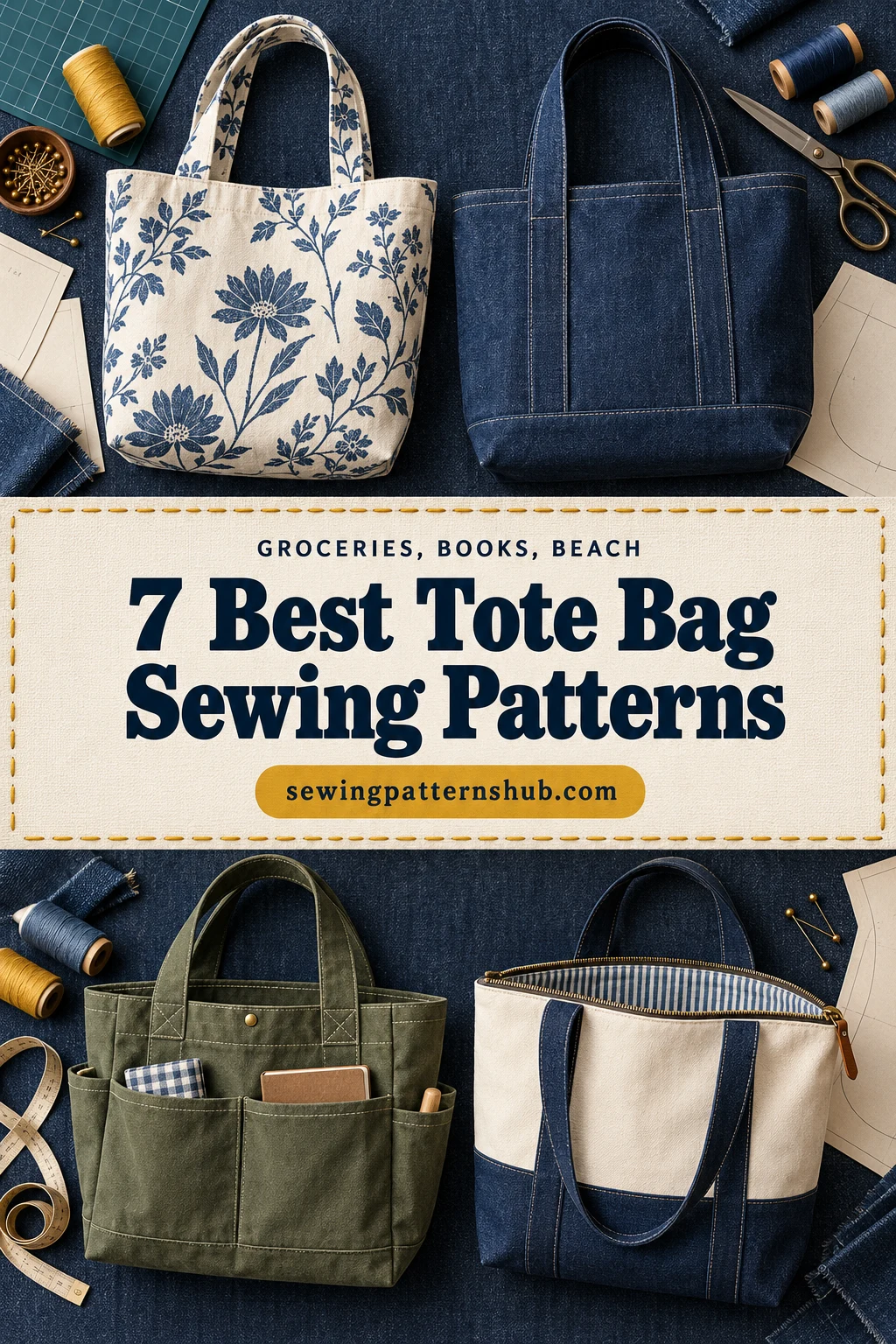
The seven totes here range from an unlined denim bag with no raw edges inside to a zip-top tote with snaps, plus two shoppers that fold into their own pocket and an origami bag. The notes after the cards compare finished sizes and explain boxed corners, handles and what goes inside the bag.
Tote Bag Sewing Pattern Choices, Lined and Unlined
Macramé and crochet totes did not make it, and neither did illustrated guides with no real pattern pieces. Each of the seven comes with printable pieces or instructions for drawing them, plus written or video steps.
TL;DR: Seven totes, from a lined bag with an optional zip or magnet and an unlined denim tote in three sizes to a pocket-heavy organizer, a zip-top bag with cork accents, two shoppers that fold into a pocket and an origami bag with video steps.
Quick Picks
- Best for first lined tote: Tote Bag with Closure
- Best for unlined tote: Reverse Seams ToteBag -Three Sizes
- Best for organizer tote: Multi Pocket Tote Bag Sewing Pattern PDF
- Best for zip-top tote: Emily Bag- Tote Bag with Pockets Sewing
- Best for tote to keep in a purse: Shopping Tote Bag Pouch Sewing Pattern
- Best for grocery tote: Foldable Tote Bag Sewing Pattern
- Tote Bag with Closure – Best first lined tote
- Reverse Seams ToteBag -Three Sizes – Best unlined tote
- Multi Pocket Tote Bag Sewing Pattern PDF – Best organizer tote
- Emily Bag- Tote Bag with Pockets Sewing – Best zip-top tote
- Shopping Tote Bag Pouch Sewing Pattern – Best tote to keep in a purse
- Foldable Tote Bag Sewing Pattern – Best grocery tote
- Origami Bag Pattern Hobo Bag Tote Bag – Best Japanese-style bag
Best first lined tote
1. Tote Bag with Closure
Best for: a classic everyday tote you can decorate. Designed by Make it in denim School.
- Large and small size
- Lining and a closure at the top
- No interfacing needed; add it if you want a stiffer bag
- 15-page photo tutorial to follow on screen, plus printable A4 pattern pages
- A separate file for the handles
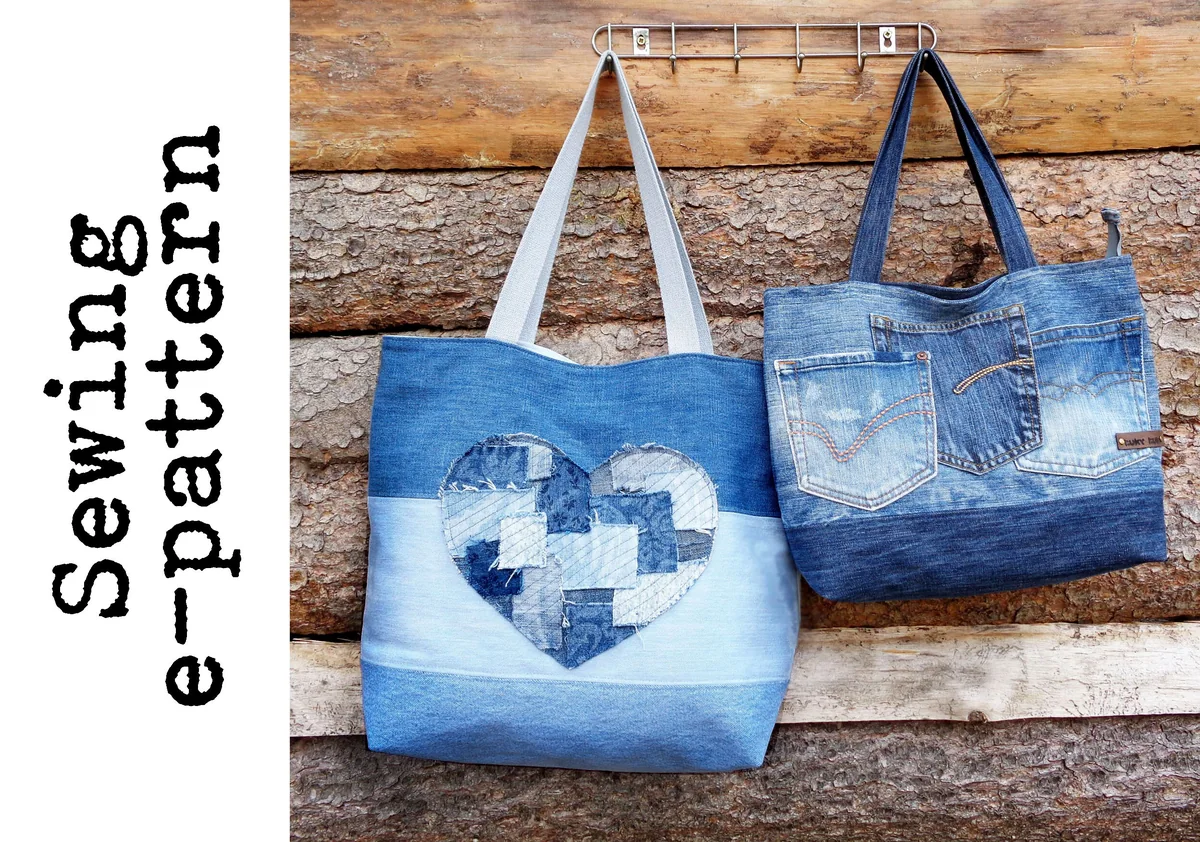
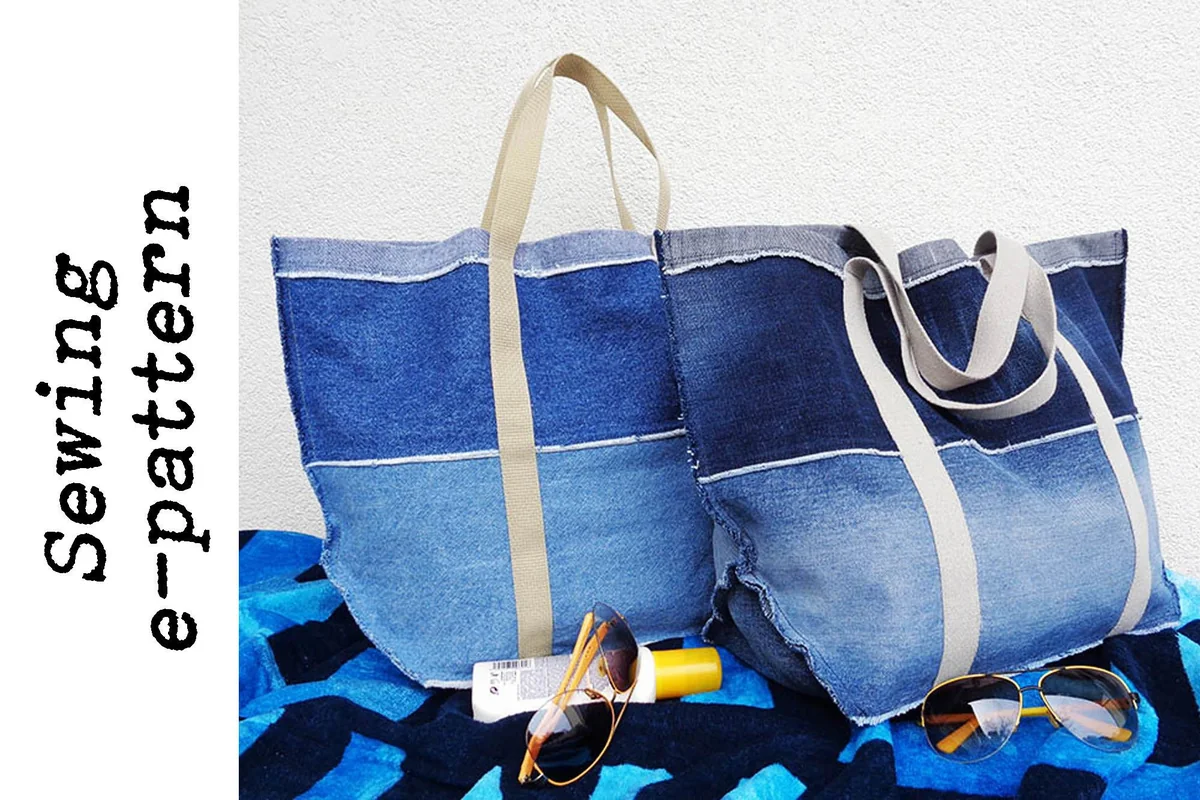
A blank-canvas tote: the designer suggests appliqué, stencils, stripes or patchwork on the plain front. Two closures are explained, a recessed zipper or a magnet, and being able to skip both makes it a gentle first lined bag in my view.
Best unlined tote
2. Reverse Seams ToteBag -Three Sizes
Best for: a sturdy denim tote with no raw seams inside. Designed by Make it in denim School.
- No lining and not a single raw seam on the inside
- Three sizes: market bag 20 x 13.5 x 7 in, project bag 16 x 15 x 6 in, casual bag 16 x 10 x 6 in
- Several handle options, an optional pocket lesson and fraying tricks
- 20-page photo instructions and printable A4 patterns
- Made for denim; good for upcycled jeans
No lining, and the seams sit on the outside, where frayed denim becomes the decoration. The project size, 16 x 15 x 6 inches, is meant for carrying knitting or crochet.
Best organizer tote
3. Multi Pocket Tote Bag Sewing Pattern PDF
Best for: a roomy tote with pockets for everything. Designed by DESIGNS NOOK.
- About 16 x 11 x 5.5 in (40 x 27 x 14 cm)
- Several outside and inside pockets and fabric handles
- Outer fabric, lining, mid-weight woven fusible interfacing and a magnetic button
- Step-by-step photo instructions, measurements in inches and centimeters
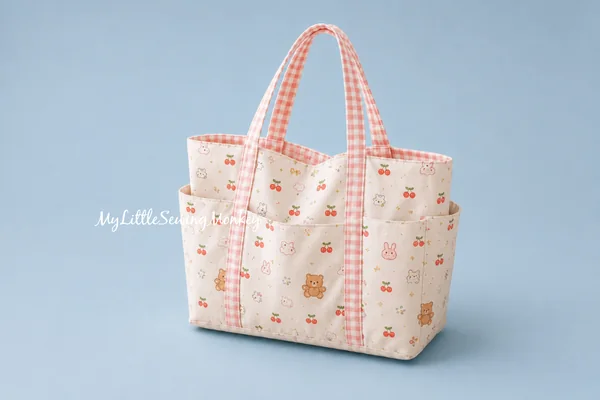
Outside and inside pockets plus a magnetic button make this the organizer of the group. Its materials list asks for mid-weight woven fusible interfacing, which should help it keep the structured shape in the photos.
Best zip-top tote
4. Emily Bag- Tote Bag with Pockets Sewing
Best for: a lined tote that closes with a zipper. Designed by Emily Gillott.
- Lined tote with a zipper along the top
- Zipped pocket on the front and two elastic pockets on the sides
- Teaches zipper insertion and KAM snaps
- Full photo step-by-step instructions
- For an intermediate sewer; sample in cork and cotton
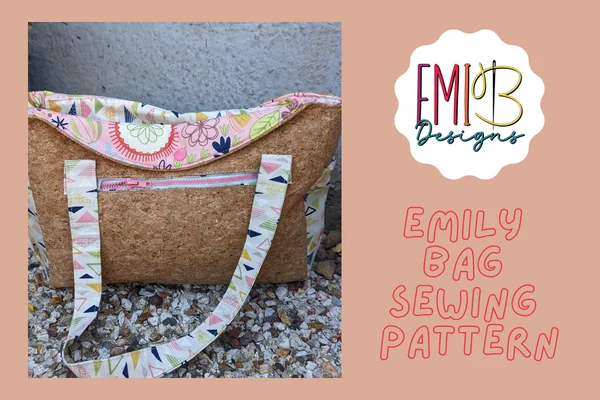
A step up: a top zip, a zipped front pocket, two elastic side pockets and KAM snaps. The designer pitches it at an intermediate sewer, and the sample pairs cork with cotton prints.
Best tote to keep in a purse
5. Shopping Tote Bag Pouch Sewing Pattern
Best for: a light shopper that folds into its own pouch. Designed by Doll Tag Clothing.
- Finished tote 15 x 16 in (38 x 41 cm)
- Attached pocket; the bag folds into it as a compact pouch
- Lightweight woven fabric: nylon, parachute fabric, polyester or cotton
- Step-by-step PDF with imperial and metric measurements, Letter and A4
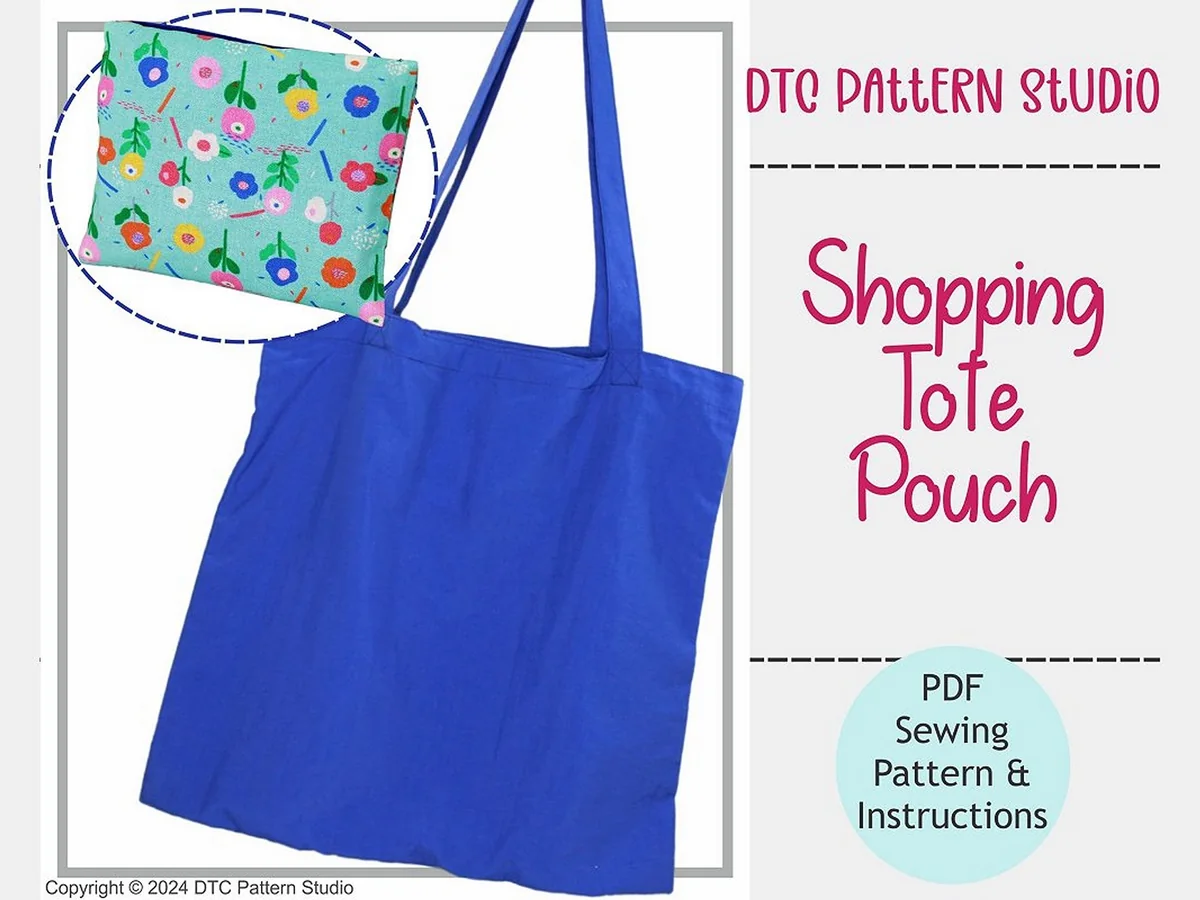
Lightweight woven fabric is the brief, nylon or parachute cloth included, so the finished bag folds into its own attached pocket. It is the one to keep in a handbag for unplanned shopping.
Best grocery tote
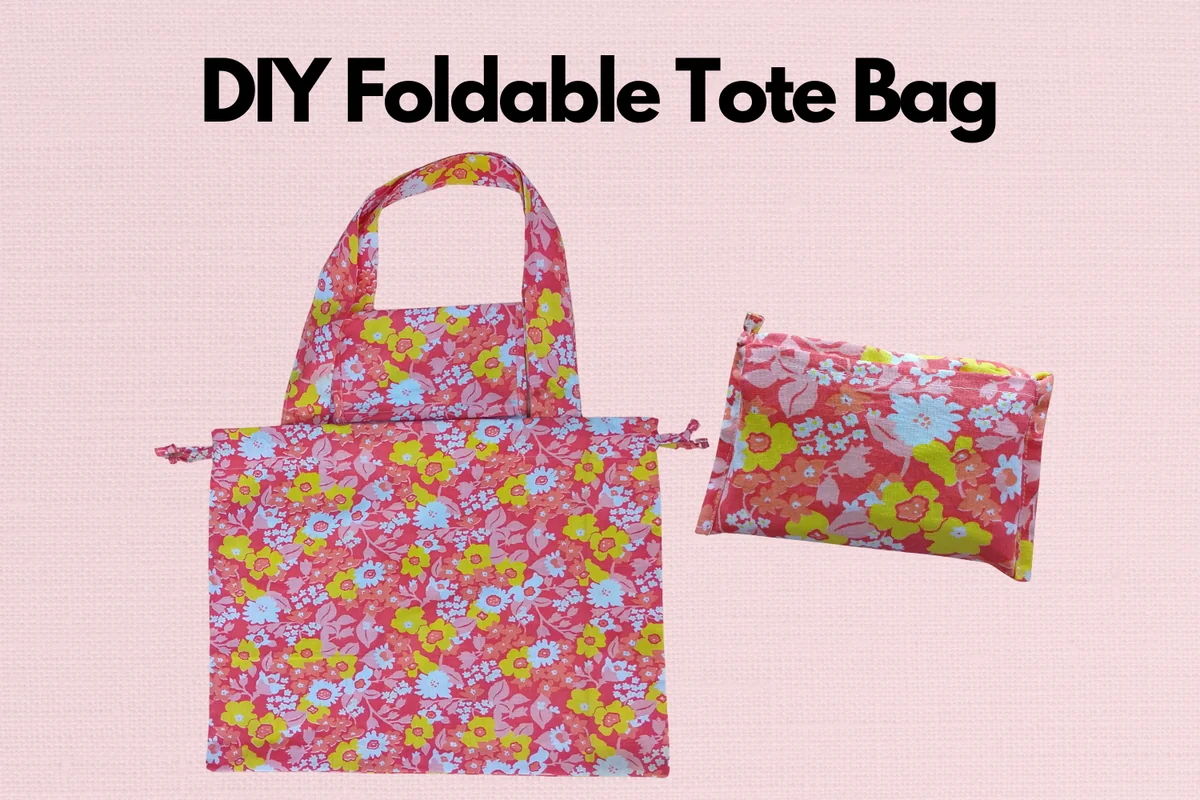
6. Foldable Tote Bag Sewing Pattern
Best for: a reusable cotton shopper with no closures. Designed by Sewspiratrice.
- Open: about 45 x 34.5 cm (17.7 x 13.6 in); folded: about 18.5 x 12 cm
- Folds into its own pocket, no closures needed
- About 1 m (1.1 yd) of light to medium cotton or quilting cotton
- Step-by-step instructions with photos and printable pattern pieces
The cotton take on a folding shopper: no closures, and about 1 m of light to medium cotton. Folded into its pocket it measures roughly 18.5 x 12 cm.
Best Japanese-style bag
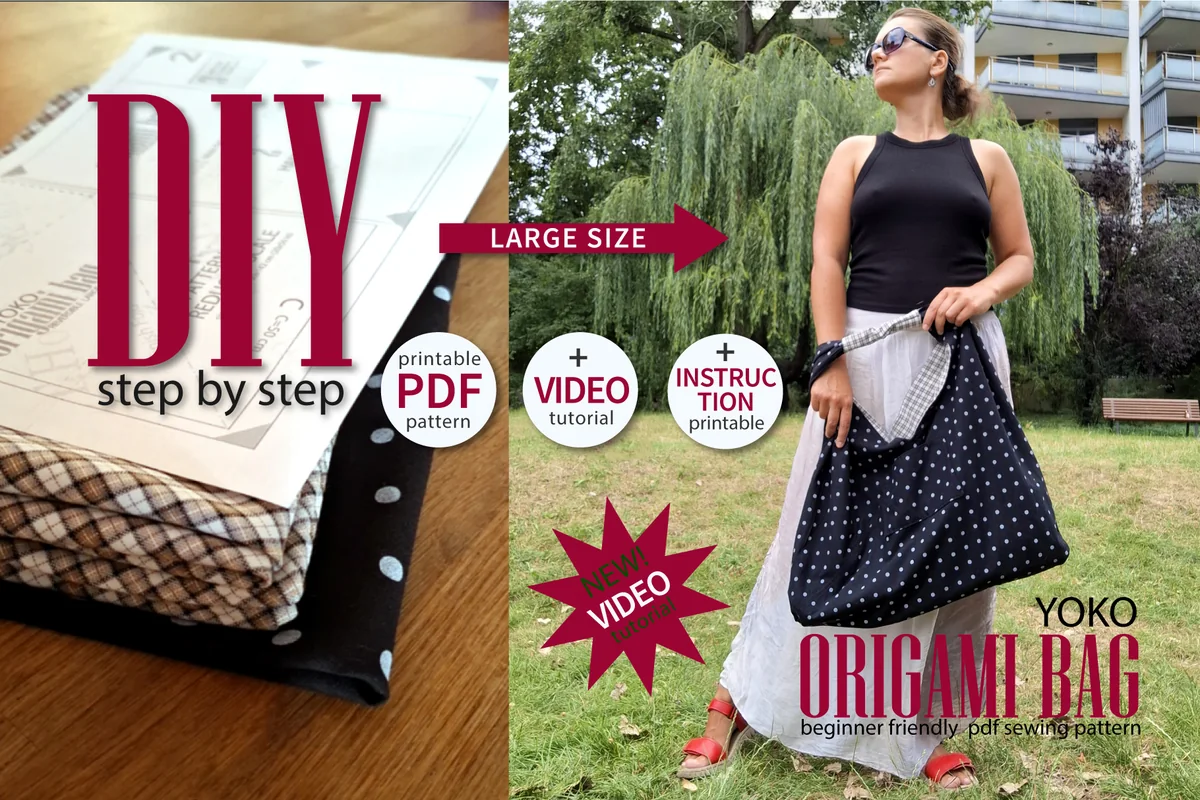
7. Origami Bag Pattern Hobo Bag Tote Bag
Best for: an origami tote and bento bag from one pattern. Designed by z.zajka.
- Printable PDF pattern
- Full video tutorial
- Variations: a roomy tote, a minimalist Japanese bag and a triangle bento bag
- Good for upcycled fabric and leftovers
Three variations in one file: a large tote, a minimalist Japanese bag and a triangle bento bag. A full video guides you through the construction, which in my view helps more with a folded shape than with a plain rectangle.
Quick Comparison
| Pattern | Type | Finished size | Lining |
|---|---|---|---|
| 1. Tote Bag with Closure | Lined, with closure | Large and small | Yes |
| 2. Reverse Seams ToteBag -Three Sizes | Unlined, reverse seams | Three sizes | No |
| 3. Multi Pocket Tote Bag Sewing Pattern PDF | Organizer, many pockets | 16 x 11 x 5.5 in | Yes |
| 4. Emily Bag- Tote Bag with Pockets Sewing | Zip top, pockets | Not stated | Yes |
| 5. Shopping Tote Bag Pouch Sewing Pattern | Foldable, attached pouch | 15 x 16 in | No |
| 6. Foldable Tote Bag Sewing Pattern | Foldable, no closures | 17.7 x 13.6 in | No |
| 7. Origami Bag Pattern Hobo Bag Tote Bag | Origami / bento | Not stated | Not stated |
Finished Sizes Side by Side
Finished size is the first thing worth comparing, because a tote that is too short for a folder stays at home. The dimensions below are the finished tote bag sizes stated in each listing (width x height x depth):
- Tote with closure: small 14 1/2 x 11 x 4 1/4 in, large 16 1/2 x 14 x 4 1/2 in.
- Reverse seams tote: market 20 x 13 1/2 x 7 in, project 16 x 15 x 6 in, casual 16 x 10 x 6 in.
- Multi pocket tote: about 16 x 11 x 5 1/2 in.
- Shopping tote pouch: 15 x 16 in.
- Foldable tote: about 17 3/4 x 13 1/2 in open.
- Origami bag: about 24 x 24 in.
Letter paper is 8 1/2 x 11 inches, so for a basic tote bag that carries papers flat, look for a body at least 12 inches tall and wide.
A Flat Bottom from Boxed Corners
Boxed corners are how most tote bags get a flat bottom. After the side and bottom seams are sewn, each corner is flattened into a triangle with the side seam lying on the bottom seam, then stitched straight across. With this marked-line method, the length of the line sets the depth of the base, roughly, once seam allowances are taken into account. Other tutorials cut a square from each corner before sewing and then pinch the cut edges together and stitch them; there the side of the square is about half the finished depth plus a seam allowance, so follow the size your pattern gives.
Box the lining the same way so it sits flat inside the outer. One tutorial suggests boxing the lining first, because the thinner fabric is easier to practice on. In many lined totes you then turn the bag right side out through a gap left in the lining seam and stitch the gap closed.
Handles: Webbing or Fabric, and How Long
Cotton webbing is the quickest handle: cut it to length and stitch it in. Fabric straps take longer, since you sew or fold a strip, turn it and topstitch it, but they match the tote bag exactly; the closure tote comes with a separate file for its handles.
For length, compare with a bag you already carry. Free tutorials in the search results cut shoulder straps at about 25 to 28 inches, while about 18 inches suits a bag carried by hand or over the forearm. Two of them place each handle about 4 inches in from the side, with roughly 1/2 inch of strap end below the top edge so the stitching has something to hold. A strap worn across the body needs more length than either, and the crossbody bag sewing patterns explain how to measure it on yourself.
Where each handle meets the bag, stitch a box with an X through it or two rows of topstitching. A full tote is heavier than it looks, and this is the area that carries most of the load.
Inside the Bag: Lining, Interfacing, Pockets
Canvas and denim often hold their shape alone; the closure tote needs no interfacing in jeans or other thick fabric, thanks to an inner panel at the top. Quilting cotton needs help, or the empty bag slumps. Fusible fleece makes a soft, padded tote and foam stabilizer one that stands up, while the multi pocket pattern calls for mid-weight woven fusible interfacing.
For a slip pocket in the lining, the tutorials I went through place it 3 to 4 inches below the top edge. On a wide pocket, a line of stitching down the middle divides it and stops it from sagging. Keys and small things are easier to find in a separate zipped pouch, and my zipper pouch sewing patterns include quick designs to make in a batch.
Canvas, Jeans and Machine Questions
How much canvas does a medium tote take?
Two free beginner tutorials both use 1/2 yard of canvas for the outer and 1/2 yard of cotton for the lining. Larger patterns need more: the foldable shopper lists about 1.1 yards, and the origami bag a 28 x 56 inch piece each of main and lining fabric.
Can I make a tote from old jeans?
Yes. The reverse seams tote is written for denim and suggests recycled jeans, with the fraying edges as part of the look. Jeans legs are narrow, though, so the market size may need pieced panels.
Will a home sewing machine handle canvas?
Usually, yes. Fit a denim needle (90/14 or 100/16), lengthen the stitch a little and go slowly where handles and seams stack up. A hump jumper, a small plastic shim under the presser foot, keeps it level over bulky seams.
Which of these suits a first tote?
The reverse seams tote, since it skips the lining entirely. For beginners who want a lined bag, the closure tote has a 15-page photo tutorial that goes step by step and can be followed on screen; the closure itself is optional.
Matching the Tote to the Load
Choose by the heaviest thing the bag will carry. For groceries, books or a laptop, pick a tote bag sewing pattern with a boxed base, sew it in canvas or denim and stitch the handles with a box and an X; the market size of the reverse seams tote and the multi pocket tote suit that job. A bag that lives folded in a purse needs the opposite: light nylon or cotton and no interfacing.
The same straight seams are the core of an apron, and other bags are under Bags and Pouches. One number to check before cutting: in my view a depth of about 5 inches is where a tote starts to hold a lunch box or bottles upright.
You May Also Like
This post contains affiliate links. If you buy through them, I may earn a small commission at no extra cost to you. Learn more.