Sew for the New Baby with These 9 Best Baby Sewing Patterns
Baby clothes from the store are adorable for about three weeks, and then the snaps stop closing over the diaper. Babies outgrow everything so fast that a handmade romper or a pair of booties makes more sense than it seems. Useful baby sewing patterns give clear sizing, name a suitable fabric and explain enough of the construction to judge the project before you cut.
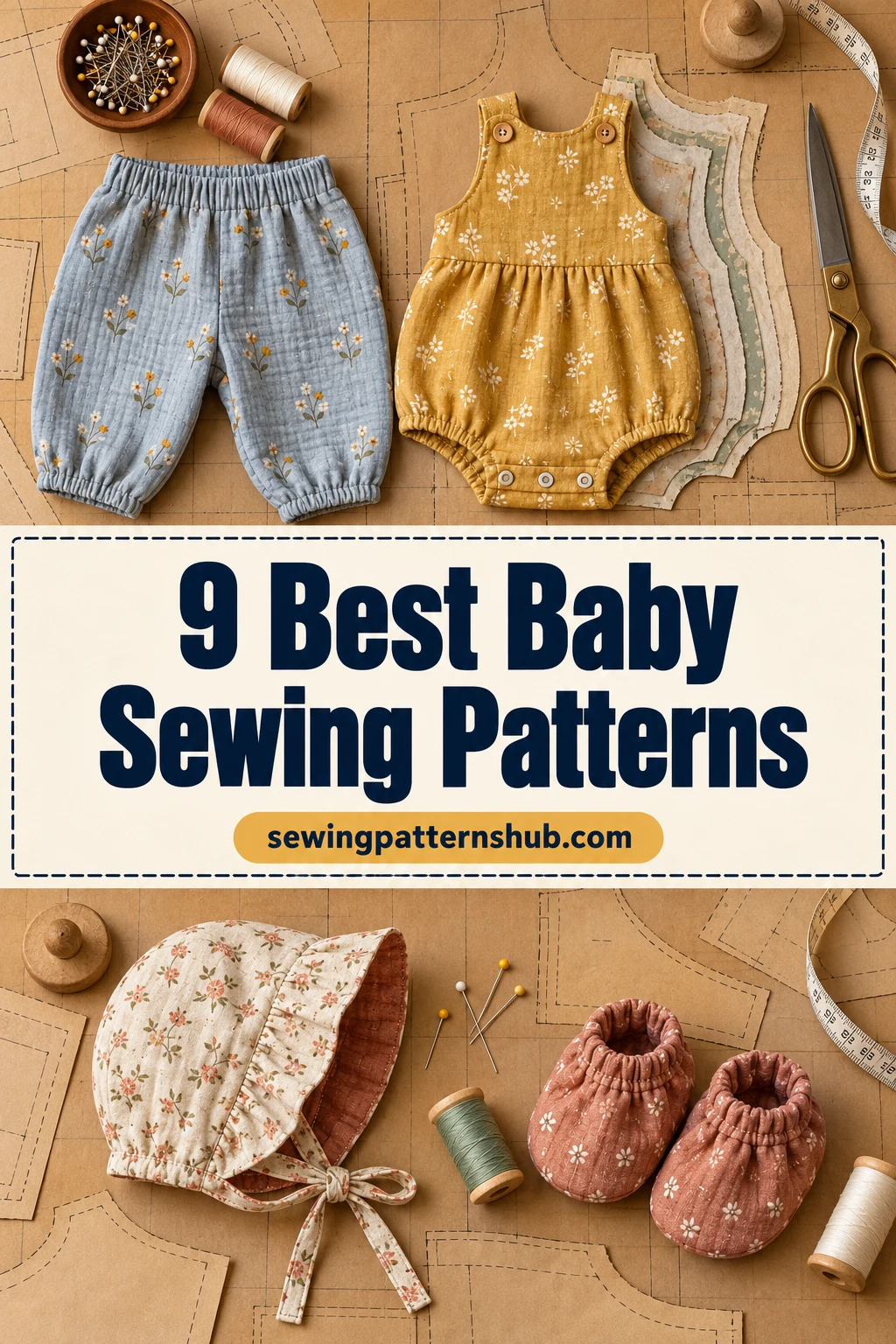
Nine patterns cover the first year and several toddler sizes: two outfits, pull-on pants and a summer romper, and a set of baby accessories, a bonnet with an optional brim, elastic-back booties, two bibs and thumb-free mittens. Two more are baby gifts rather than baby clothing, a newborn photo cocoon and a bunny comforter, and a few of the patterns fit babies and toddlers up to 3T or older. After the cards I cover sizing, knit and woven fabrics, safety around sleep and small parts, and how the two bibs differ.
Baby Sewing Patterns from Newborn to Toddler
Crib bumpers, pillows and other bedding stayed off the list on purpose, since safe sleep guidance keeps soft items out of a baby’s sleep space. Each pick is a sewing pattern made for a baby or a toddler; where the listing gives sizes, the card shows them.
TL;DR: From a bonnet sized by head circumference to booties that run up to age 6, these nine cover what a baby wears plus two gifts that are not for wearing. The pants and romper go to 18 months, one bib handles drool and the other mealtimes, and the cocoon and bunny comforter are for photos and awake-time cuddles.
Quick Picks
- Best for first baby project: Baby Pants Sewing Pattern
- Best for romper: Romper Baby Sewing Pattern/Tutorial
- Best for baby bonnet: May Bonnet Baby Sewing Pattern
- Best for booties: Baby Shoes Sewing Pattern, Baby Booties
- Best for newborn gift: Baby Cocoon Swaddle and Headband Sewing
- Best for comforter: Bunny Baby Blanket Sewing Pattern DIY
- Baby Pants Sewing Pattern – Best first baby project
- Romper Baby Sewing Pattern/Tutorial – Best romper
- May Bonnet Baby Sewing Pattern – Best baby bonnet
- Baby Shoes Sewing Pattern, Baby Booties – Best booties
- Baby Cocoon Swaddle and Headband Sewing – Best newborn gift
- Bunny Baby Blanket Sewing Pattern DIY – Best comforter
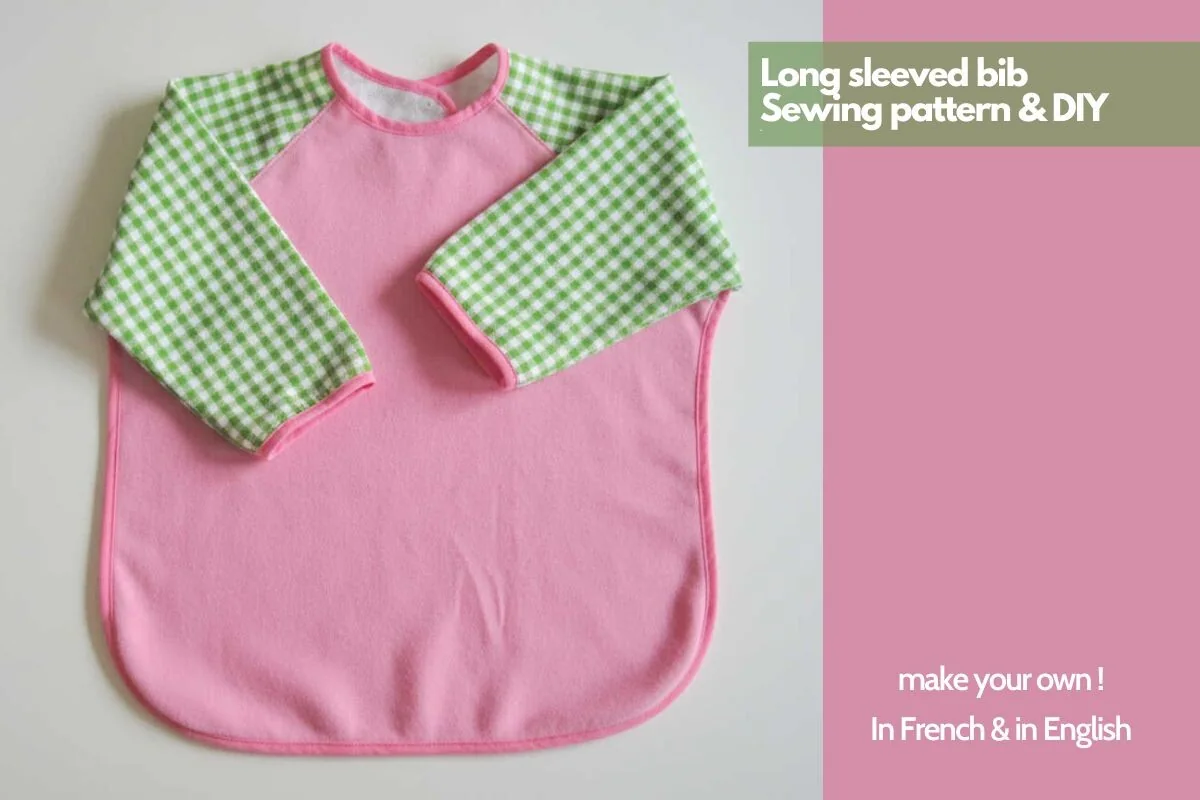
- Long Sleeved Baby Bib Sewing Pattern – Best bib for weaning
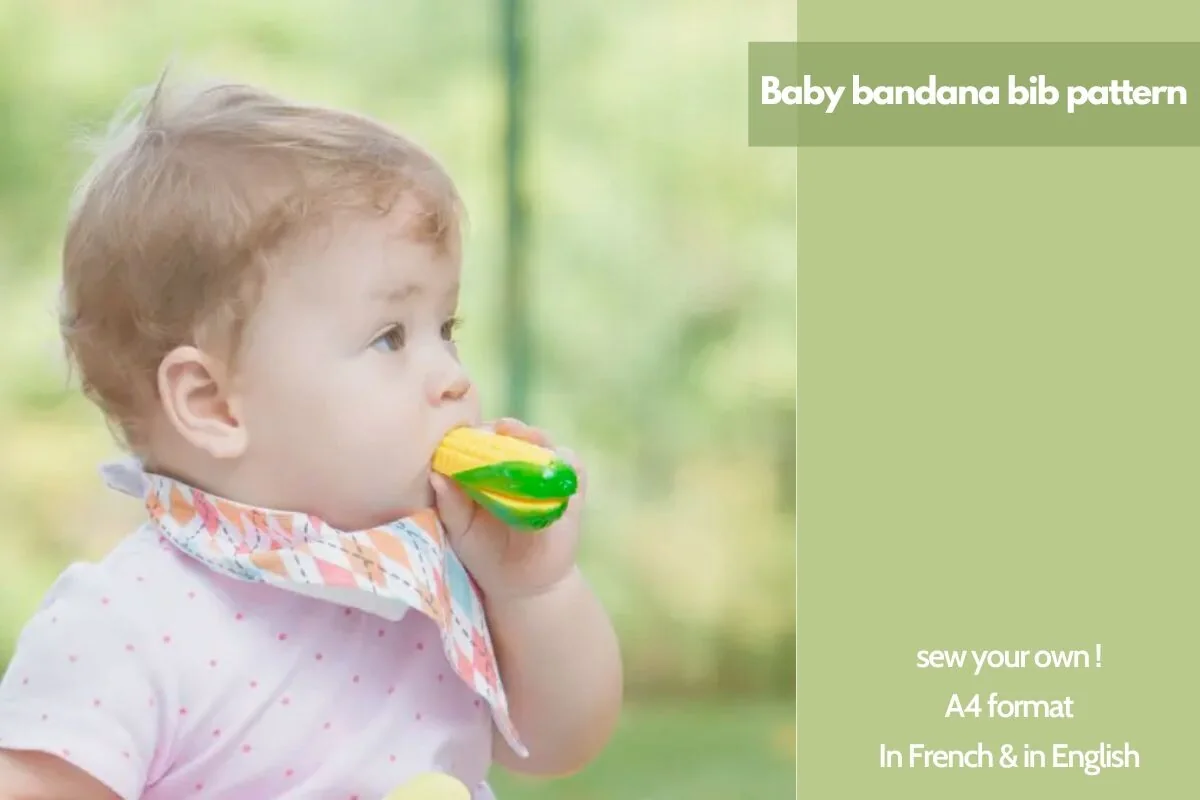
- Baby Bandana Bib Sewing Pattern – Best drool bib
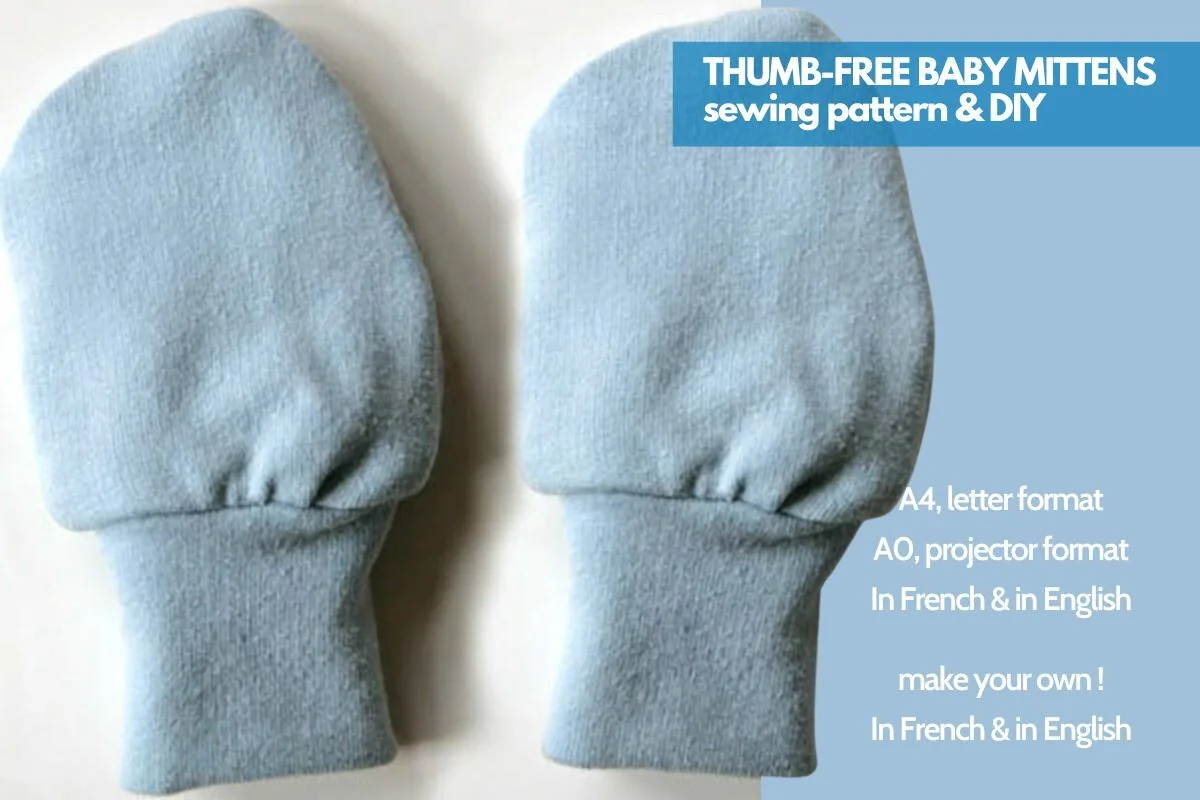
- Thumb Free Baby Mittens Sewing Pattern – Best mittens
Best first baby project
1. Baby Pants Sewing Pattern
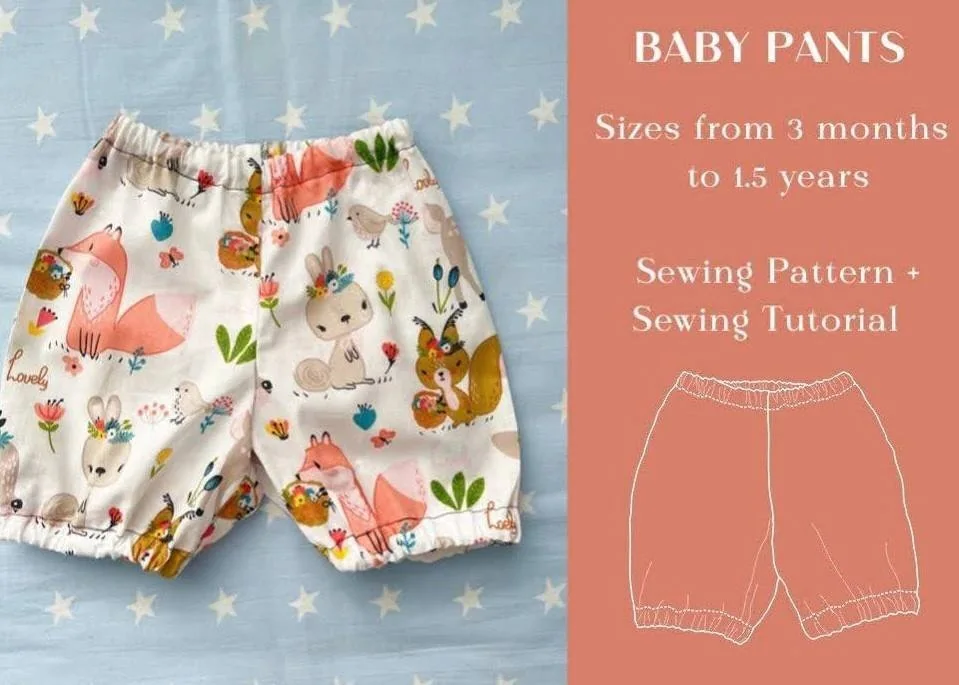
Best for: pull-on pants that stay on. Designed by Cotton Miracle Studio.
- 5 sizes from 3 months to 1.5 years
- Elastic at the waist and the ankles
- Cotton jersey or other cotton fabrics
- 2 PDF files: pattern and step-by-step instructions with many photos
Two PDFs, one with the pattern and one with photo steps written without trade terms. The designer says the elastic at the waist and at both ankles is what keeps the pants from slipping off.
Best romper
2. Romper Baby Sewing Pattern/Tutorial
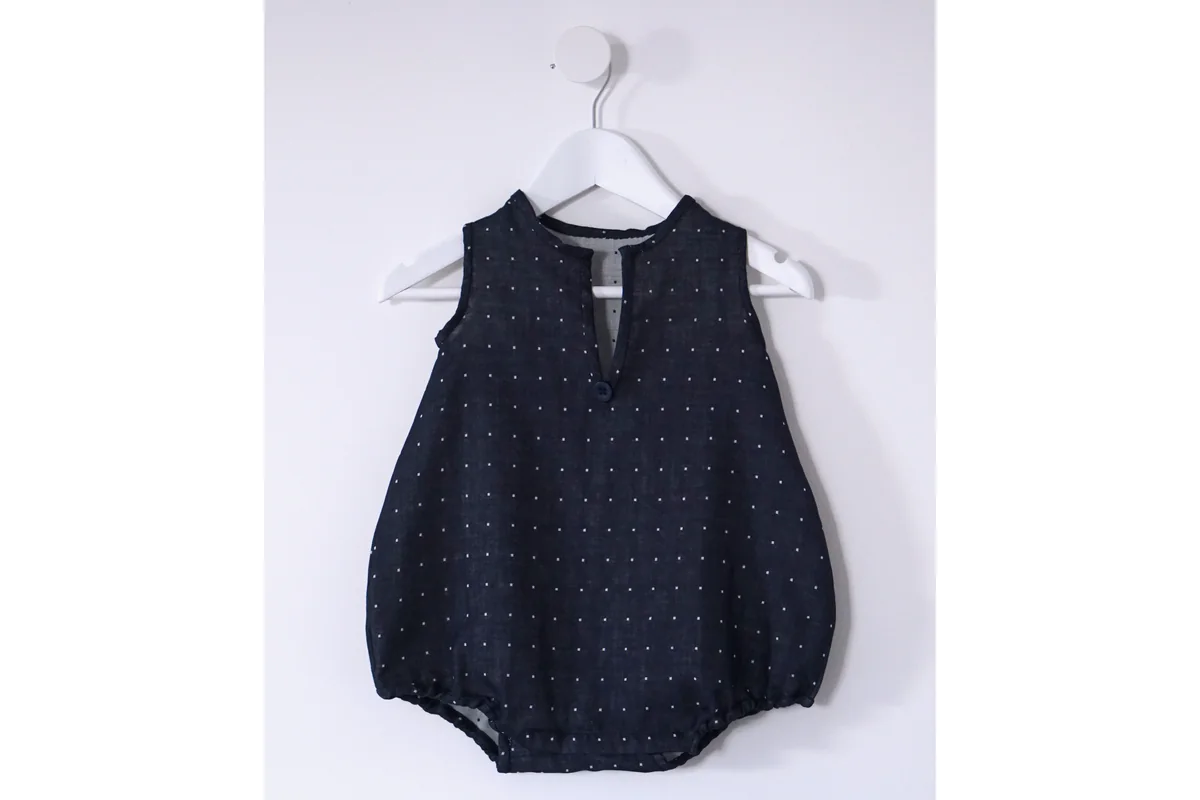
Best for: a summer romper in four sizes. Designed by jeremyfrossard.
- Sizes 3, 6, 12 and 18 months
- 0.5 cm seam allowance included
- Step-by-step instructions with HD pictures
- Full-size pattern, prints on A4
Measurements are in centimeters and a 0.5 cm seam allowance is already on the pieces. Check the body chart in the listing images before choosing between 3 and 18 months.
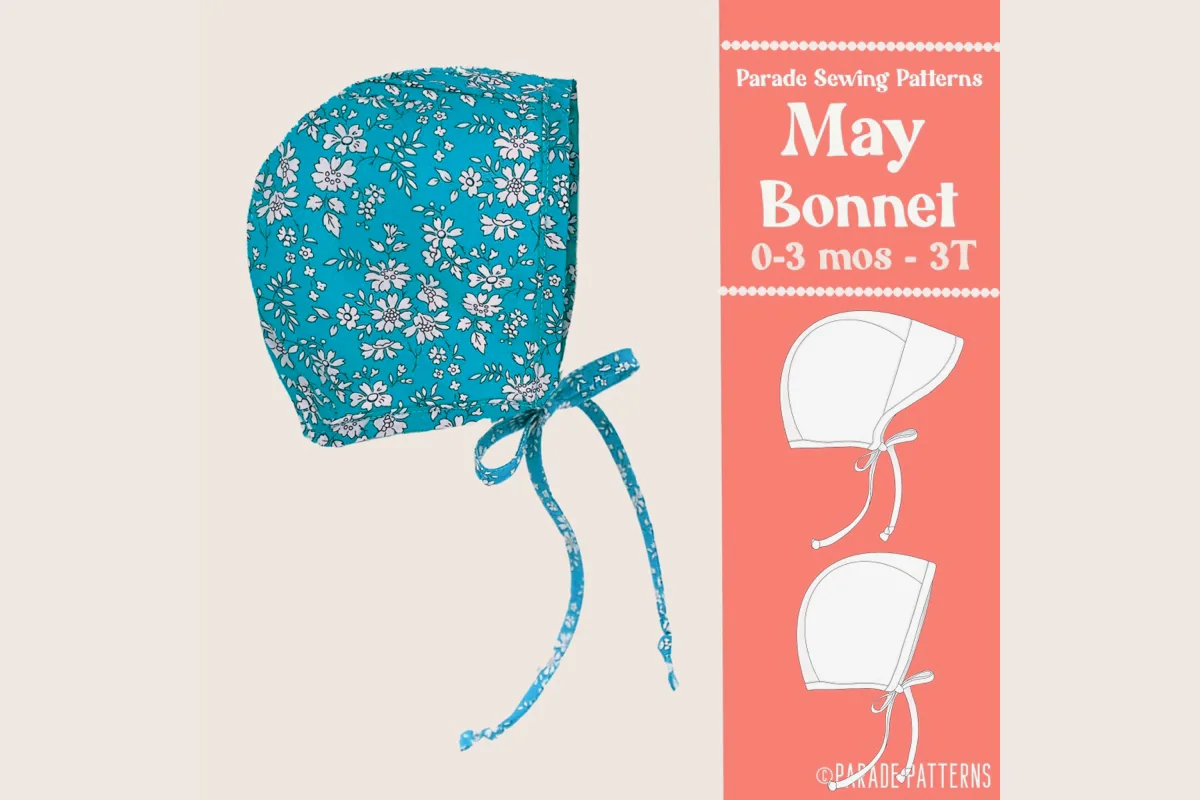
Best baby bonnet
3. May Bonnet Baby Sewing Pattern
Best for: a vintage-style bonnet for sun and shade. Designed by Parade Patterns.
- 6 sizes from 0-3 months to 3T
- Sized by head circumference, 14 to 21.25 in
- Described as easy to sew
One file holds a brimmed bonnet for sun and a classic one without a brim, plus a 20-page booklet with a photo for each step. Sizing by head circumference is, in my view, more reliable for a hat than age.
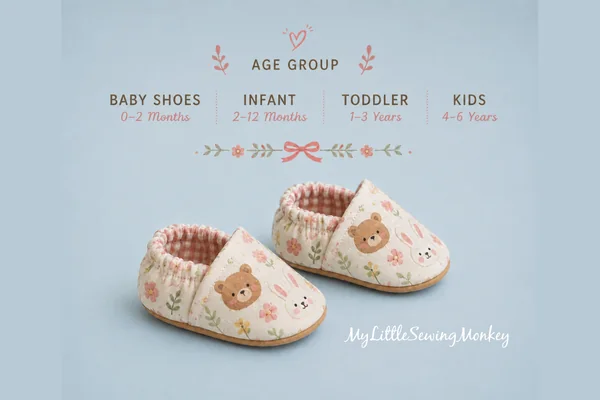
Best booties
4. Baby Shoes Sewing Pattern, Baby Booties
Best for: soft elastic-back booties. Designed by DESIGNS NOOK.
- Ages 0 to 6 years
- Elastic back for a comfortable fit
- Illustrated PDF instructions step by step
- Marked beginner friendly
Sized from newborn to 6 years, with fit adjustment notes, so the same file can follow a child for years; the listing pitches them as a way to use up scraps. The supply list asks for two pieces of fabric, 22 x 12 inches each, with fusible fleece as an option.
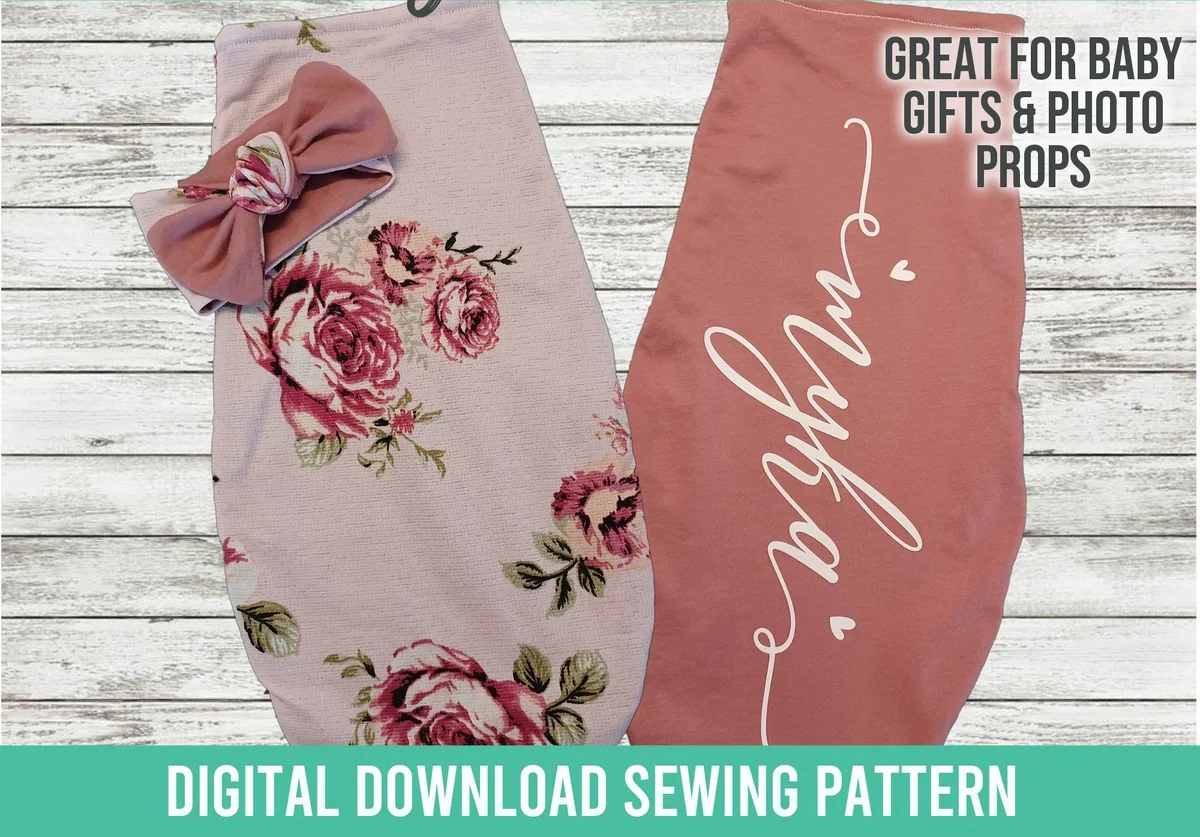
Best newborn gift
5. Baby Cocoon Swaddle and Headband Sewing
Best for: a reversible cocoon with a headband. Designed by Kennie Designs.
- For newborns to about 2 months
- Cocoon about 19 in long; headband about 13.5 in
- Reversible, in stretchy knit jersey
- Written instructions with lots of photos, easy to sew
Sold as a reversible newborn photo prop, about 19 inches long, with a 13.5 inch headband. The vinyl name in the preview is not part of the pattern, and in my view the cocoon belongs in photos, not in the crib.
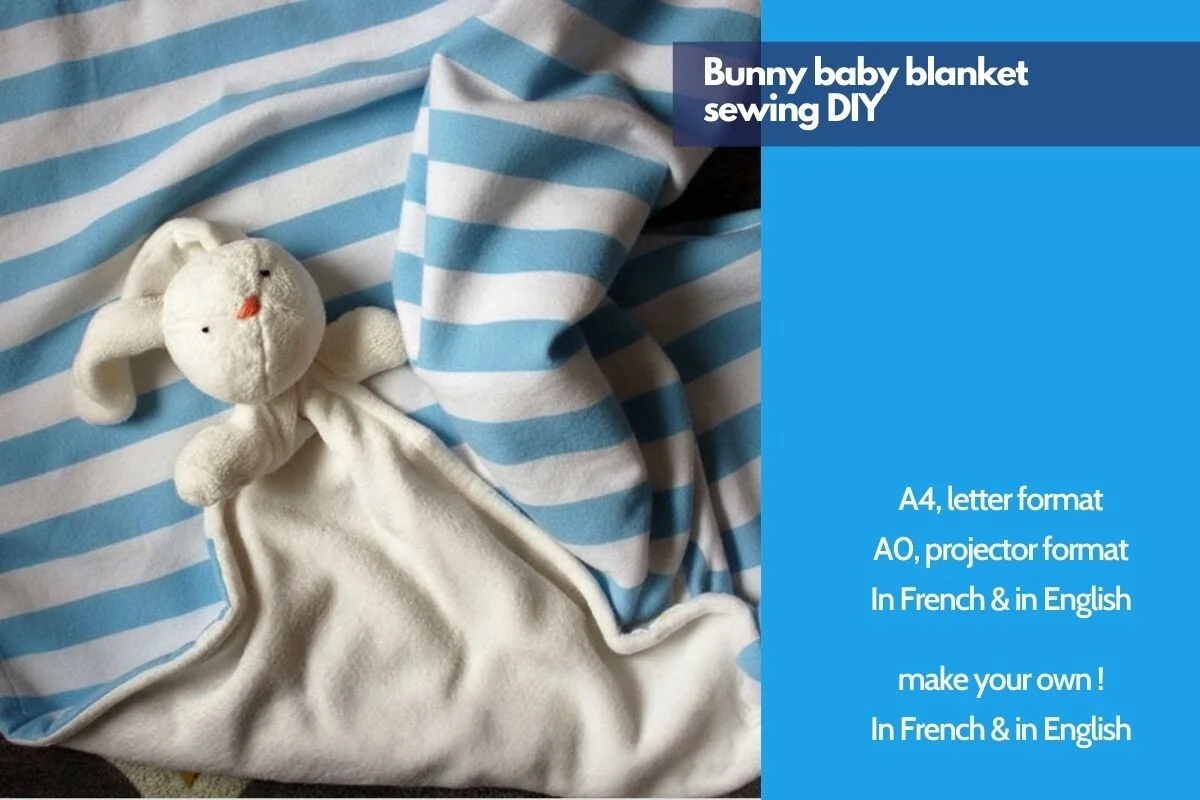
Best comforter
6. Bunny Baby Blanket Sewing Pattern DIY
Best for: a bunny comforter blanket. Designed by Petit Citron.
- Bunny head and arms with a blanket for the body
- Terry cloth and flannel, or fleece
- Head and arms pattern; the blanket is the body
Only the head and arms are patterned; the blanket itself forms the body, in terry cloth and flannel or in fleece. Treat it as an awake-time cuddle and keep it out of the crib.
Best bib for weaning
7. Long Sleeved Baby Bib Sewing Pattern
Best for: an apron bib with long sleeves. Designed by Petit Citron.
- Size 18 months
- Long raglan sleeves and a back closure with snaps or hook-and-loop tape
- Waterproof PUL fabric recommended
- A4/Letter layered and A0 files, illustrated instructions; beginner level
One size, 18 months, with raglan sleeves and a back closure. PUL is the designer's first choice for the body, and the A0 file saves taping pages together.
Best drool bib
8. Baby Bandana Bib Sewing Pattern
Best for: a bandana bib for teething. Designed by Petit Citron.
- A printed fabric for the front and terry cloth for the back
- Protects clothes and skin from drool
Three sizes, 6, 12 and 24 months, in A4, Letter, A0 and projector files. The listing recommends terry or double gauze for the absorbent layer, and two snaps close it.
Best mittens
9. Thumb Free Baby Mittens Sewing Pattern
Best for: mittens that keep tiny nails off the face. Designed by Petit Citron.
- Thumb-free mittens for babies
- For warmth and to stop scratching
- Letter and A4 formats, plus projector files
The listing is short: thumb-free mittens for winter warmth and for keeping new nails off the face, in Letter, A4 and projector files. The listing does not name a fabric or a size, so check the pattern pieces and any fabric notes in the file before cutting.
Quick Comparison
| Pattern | Item | Sizes | Instructions |
|---|---|---|---|
| 1. Baby Pants Sewing Pattern | Pants | 3 to 18 months | Photo steps |
| 2. Romper Baby Sewing Pattern/Tutorial | Romper | 3 to 18 months | HD photos |
| 3. May Bonnet Baby Sewing Pattern | Bonnet | 0 months to 3T | Easy |
| 4. Baby Shoes Sewing Pattern, Baby Booties | Booties | 0 to 6 years | Illustrated |
| 5. Baby Cocoon Swaddle and Headband Sewing | Cocoon, headband | Newborn | Many photos |
| 6. Bunny Baby Blanket Sewing Pattern DIY | Comforter | Baby | Not stated |
| 7. Long Sleeved Baby Bib Sewing Pattern | Sleeved bib | 18 months | Illustrated |
| 8. Baby Bandana Bib Sewing Pattern | Bandana bib | Baby | Instructions |
| 9. Thumb Free Baby Mittens Sewing Pattern | Mittens | Baby | PDF pattern |
Months on the Label, Inches on the Baby
Age sizes are averages, and two babies of six months can be a size apart. The romper comes in 3, 6, 12 and 18 months, with a body chart and finished measurements in centimeters in the listing images, so compare the baby’s chest and length with that chart rather than going by age. The bonnet is sized by head circumference instead, from 14 inches for 0 to 3 months up to 21.25 inches for 3T.
For a head measurement, run the tape around the widest part, just above the eyebrows and ears.
Check the seam allowance before cutting, too. The romper includes 0.5 cm, and the pants pieces come full size with the allowance already added, so adding your own 5/8 inch on top would make either one bigger than drafted.
Knit or Woven for Baby Clothing
Knits stretch over a round head and a diaper, which is why so many baby patterns ask for them. The pants call for cotton jersey or other cottons, and the cocoon is drafted for stretchy knit jersey. Free baby patterns in the top results mostly ask for light to medium weight knits, with rib knit for neckbands and cuffs.
The bonnet goes the other way: it is written for a woven fabric, with knit as a possible substitute. A stable woven cotton holds a brim and is usually easier to control than a stretchy knit.
Whatever the fabric, prewash it the way the finished piece will be washed, since cotton can shrink and new fabric often carries finishes. Knits sew best with a ballpoint or stretch needle and a narrow zigzag or stretch stitch, so the seams can stretch with the fabric.
Safety Around Sleep, Necks and Small Parts
The American Academy of Pediatrics advises a firm, flat sleep surface with no pillows, blankets or soft toys for a baby’s first year. That shapes how two of these patterns are used. The bunny comforter is a cuddle for awake time with an adult nearby, and the cocoon is sold as a newborn photo prop, not as sleepwear.
- Bibs: both close with snaps or hook-and-loop tape rather than ties. Even so, take any bib off before naps and bedtime, and whenever the baby is not being watched.
- Snaps and buttons: on anything for a child under 3, a snap or button that comes off is a small part a baby could swallow. Set snaps with the tool and reinforcement the snap maker specifies, tug-test them before the first wear and check them regularly, and leave off beads, decorative buttons and glued-on trims.
- Faces on toys: if you add eyes to the bunny, embroider them instead of using buttons or plastic eyes.
- Thread tails: before the first wear, turn mittens and booties inside out and trim or secure any loose threads, since a long thread can wrap around small fingers or toes. Check again after washing.
- Walking toddlers: cotton soles can slide on hard floors, so a non-slip sole fabric is worth considering on the bigger bootie sizes.
A Bandana Bib or a Sleeved Bib
The two bibs do different jobs. The bandana bib is for drool: a printed cotton front over an absorbent back such as terry or double gauze, closed with two snaps, in 6, 12 and 24 month sizes. The sleeved bib is for feeding time and paint, covers both arms and comes in one size, 18 months, with bias binding or a hem around the edges.
Its designer recommends PUL, a polyester fabric laminated with polyurethane, which the listing describes as waterproof and easy to wash, with coated cotton as a stiffer option. Pins leave holes in a laminate, so hold PUL layers with clips and keep the pins inside the seam allowance if you must use them.
Baby Shower Sewing Questions
How much fabric do these baby projects take?
It varies more than you might expect. The booties list two pieces of fabric of 22 x 12 inches each, the bonnet about a yard (enough for an outer and a lining), and the cocoon about 1 yard each of two knits, or 1 1/2 yards of a single fabric.
Which of these suit a beginner?
The pants are the baby pattern written most plainly for a beginner: the instructions avoid trade terms, and the designer says even a beginner can sew them. The booties and the sleeved bib are also marked beginner level, while the bonnet is listed as confident beginner, one step up.
Do I need a serger for baby knits?
No. Two of the free pattern roundups in the search results point out that baby knits can be sewn on a regular machine. A narrow zigzag or a stretch stitch does the job; a serger only makes the inside neater and faster.
Sewing for a Baby Who Has Not Arrived Yet
When the baby is not born yet, the size is the one thing you cannot check. In my view the 6 or 12 month size of the pants, the romper or the bonnet is the more practical choice for a shower gift, since the baby grows into it. Bigger sizes for later are in the kids and baby section. Whichever of these baby sewing patterns you pick, prewash the fabric and include a note of its fiber content and care instructions with the gift.
You May Also Like
This post contains affiliate links. If you buy through them, I may earn a small commission at no extra cost to you. Learn more.